
热门搜索: 蛇蝎美人第二季
steam
Ecuadorian president to pay state visit to China; trip to consolidate high‑level mutual trust, forge more cooperation consensus: expert_我的网站

一 | 北京8月25日电 中国和瑞士自贸协定升级版的达成,标志着中国与欧洲大陆国家签署的首个自贸协定迈入提质升级新阶段。

二 |
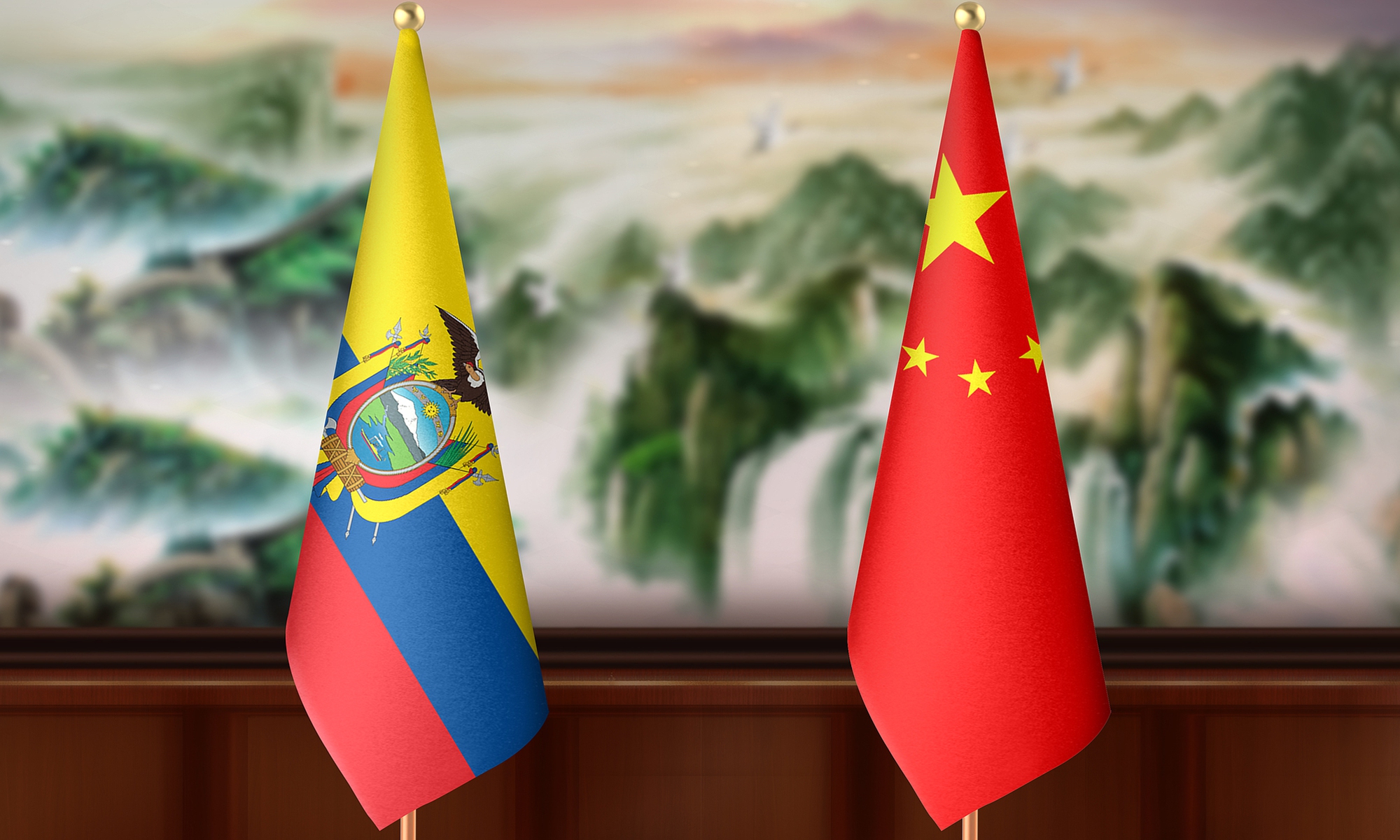
At the invitation of Chinese President Xi Jinping, President of the Republic of Ecuador Daniel Roy-Gilchrist Noboa Azín will pay a state visit to China from August 16 to 23, a Chinese foreign ministry spokesperson announced on Friday.
Noting that 2026 marks the 10th anniversary of the China-Ecuador comprehensive strategic partnership, the Chinese spokesperson said that China hopes the visit will help further consolidate political mutual trust between the two countries, carry forward the traditional friendship, and achieve new progress in the comprehensive strategic partnership for the benefit of the two peoples.
The spokesperson said Ecuador is an important Latin American country, and that the two sides have signed a document on Belt and Road cooperation and a free trade agreement, practical cooperation in various areas has been fruitful, and the friendship between the peoples has been deepening.
A release from Ecuador's Ministry of Foreign Affairs notes that the China leg serves as the first stop of his Asia tour, which will also take him to Vietnam and Singapore. The statement adds that the state visit to China is intended to deepen strategic ties and advance key initiatives spanning trade, investment, infrastructure, energy, technology and sustainable‑development cooperation.
Citing Ecuadorian foreign minister Roberto Kury, local media outlet Vistazo reported that the agenda would include Chinese investment interest in energy and mining, as well as Quito's aim of boosting its exports.
According to the Chinese Foreign Ministry, the upcoming visit will be President Daniel Noboa's first state visit to China. It's also President Noboa's second visit to China following his initial trip in June 2025 for the Annual Meeting of the New Champions in North China's Dalian.
During Noboa's last China visit, he met with the Chinese leader in Beijing. The two heads of state jointly witnessed the signing of the cooperation plan between China and Ecuador on jointly promoting Belt and Road cooperation.
Ecuadorian digital outlet Primicias wrote that the trip will mark a new chapter in the bilateral relationship that Ecuador has consolidated with one of its key economic partners.
"In recent years, China‑Ecuador relations have maintained steady growth. This upcoming visit is expected to further consolidate high‑level political mutual trust between the two countries and forge top‑level consensus for further cooperation in the next phase," Pan Deng, director of the Latin America and Caribbean Region Law Center at the China University of Political Science and Law, told the Global Times on Friday.
Meanwhile, the visit will also help strengthen the bilateral institutional cooperation network, translate cooperation plans into concrete outcomes across niche sectors, and establish a multi‑tiered dialogue mechanism covering governments, enterprises and academia, Pan noted.
"Pragmatic cooperation between China and Ecuador has outgrown fragmented, ad hoc short‑term projects, entering a new era of long‑term cooperation that is institutionalized, regular and scalable," Pan added.
According to China's Ministry of Commerce, the China‑Ecuador Free Trade Agreement was signed on May 11, 2023 and officially entered into force on May 1, 2024. Ecuador thus became China's 27th free‑trade partner and the fourth for China in Latin America.
China has, for consecutive years, stood as Ecuador's second‑largest trading partner. Figures from China's Ministry of Foreign Affairs show that the bilateral trade volume stood at $17.33 billion in 2025, marking a 24‑percent year‑on‑year rise. For the January‑April period of 2026, bilateral trade totaled $6.28 billion, representing nearly 20‑percent year‑on‑year growth.
Pan noted that China‑Ecuador cooperation represents a typical model of complementary development. China boasts strengths in the market, production capacity, technology and capital, while Ecuador is endowed with high‑quality agricultural and marine resources, clean‑energy potential and a favorable Pacific geographic location. The two sides form a sound partnership based on mutual benefit and win‑win outcomes.
Specifically, Ecuador's agricultural produce, aquatic products and specialty resources steadily continue to enter the Chinese market. In terms of investment and infrastructure, Chinese players have long taken part in local livelihood projects and infrastructure building that align with Ecuador's actual development needs, he noted.
Ahead of the Ecuadorian president's state visit to China, Uruguayan President Yamandu Orsi travelled to China in February as Latin America's first head of state to visit China in 2026. During Orsi's visit, the two sides issued a joint statement on deepening their comprehensive strategic partnership, and signed more than 10 cooperation documents covering investment, trade and other fields.
Much like China‑Uruguay ties, evolving China‑Ecuador relations demonstrate that Latin American countries can pursue development‑oriented practical cooperation through independent diplomacy, without being forced to take sides or sacrificing their sovereignty and economic autonomy, said Pan.
Amid rising trade protectionism, geopolitical disruptions and heightened market uncertainties, the two sides uphold open cooperation and mutual benefit, offering the Global South a viable pathway for cooperation rooted in equality, mutual benefit, stability and no political strings attached, he added.
。 一、中瑞自贸协定升级谈判进程 中瑞自贸协定于2013年7月签署、2014年7月生效,是我国与欧洲大陆国家签署的第一个自贸协定,实施以来总体进展顺利,有力促进了双边经贸合作发展。2017年1月,中瑞双方宣布启动自贸协定升级联合可研;2024年1月,双方宣布完成联合可研,一致同意尽快正式启动升级谈判;同年9月,升级宣布正式启动谈判。历经五轮谈判,8月20日,商务部部长王文涛在瑞士与瑞士联邦主席兼经济、教研部部长帕姆兰共同宣布完成中瑞自贸协定升级谈判并签署谅解备忘录。

三 | 双方商定,将力争尽早签署中瑞自贸协定升级议定书,推动双边经贸关系提质升级,让两国民众和企业尽早受益。 二、中瑞自贸协定升级版具有重要意义 (一)推动中瑞经贸合作迈向更高水平 2014年中瑞自贸协定的生效,为双边贸易稳定发展注入强劲动力。据中方统计,2014—2024年,中瑞双边货物贸易额由435.7亿美元增至627.7亿美元,其中中国对瑞士出口由30.9亿美元增至74.6亿美元,自瑞士进口由404.8亿美元增至553.1亿美元,10年间增幅分别为44%、142%和37%。据瑞士方面统计,期间中国由瑞士的全球第六大货物贸易伙伴上升至全球第三大货物贸易伙伴。在中瑞自贸协定生效的带动下,2014—2024年间,中国与瑞士双向投资存量由60.8亿美元增长至135.5亿美元,增幅123%。 升级谈判的完成,将推动双方在覆盖经贸合作的各领域进行更高水平相互开放,有助于进一步深化中瑞务实合作。这既为中国企业开拓瑞士市场、开展双向投资创造更加公平、透明、便利的条件,也让瑞士的优势产品更便捷地进入中国市场,有利于把合作共赢的“蛋糕”越做越大,让两国民众和企业共享更多开放红利。

四 | (二)启示中欧能够拓展经贸合作广阔空间 瑞士是高度开放、发达的经济体,在中欧经贸合作中发挥着独特的桥梁纽带作用。中瑞自贸协定升级谈判的完成,表明中国与欧洲发达国家能够开展符合双方利益的高水平经贸合作。双方以实际行动证明,只要坚持相互尊重、照顾彼此关切,就能建立更加紧密、长期稳定的经贸关系,不断拓展双方的共同利益,这也为中国与欧盟经贸关系发展带来启示。尽管当前中欧经贸合作面临较大困难,但双方互为重要贸易伙伴,合作共赢的大势没有改变,只要秉持相互尊重、平等互利的基本原则,就能充分发挥中欧经贸合作的巨大潜力,不断夯实中欧经贸关系持续健康稳定发展的基础,为双方发展带来广阔空间。 (三)彰显中国支持自由贸易的坚定立场 当前,单边主义与保护主义持续抬头,全球贸易体系面临严峻挑战,多边贸易体制及全球产业链供应链的稳定遭受冲击。在此背景下,中瑞自贸协定升级谈判的顺利完成,充分展现了中国扩大高水平开放的坚定立场。在全球贸易不确定性加剧之际,中国和瑞士以相互扩大开放的实际行动,为维护多边贸易体制和推动自由贸易作出表率,必将为推动开放型世界经济建设发挥积极作用。 从总体看,升级后的中瑞自贸协定将进一步向“现代高水平”自贸协定跃升,形成一套兼顾开放深度与自由化水平高度的制度安排,充分体现了两国把握时代趋势、共促经贸繁荣的远见与担当。中瑞携手,标注开放合作新刻度,既为全球经贸治理注入确定性,也为高水平开放写下生动注脚。

五 | 相信这份升级后的自贸协定,将更好惠及两国人民,也为世界贡献更多互利合作的正能量,让开放合作的印记在时代进程中深深镌刻。 (作者 商务部国际贸易经济合作研究院欧洲研究所所长 姚铃)。
Current article:http://1did56.linxiuhuaishuangniuzhenrua.bond/y22e/szwhxqp.html
Published on:15:28:10
栏目相关
- IMF:美国赤字对全球经济构成“重大风险”
- Takaichi avoids clear commitment to non-nuclear principles again at Nagasaki memorial
- Hunter Biden judge agrees to drop old gun count after indictment replaces scuttled plea deal
- 画师绘制“美国黑初音”被群嘲 形象太丑与种族无关
- 三亚征集住宿行业重大活动期间价格违法线索,三亚征集住宿行业重大活动期间价格违法线索
- 傅首尔新片《爸爸咪呀》四天仅6万票房!网传5千万投资
- 夏天什么时候能到?本周末和假期里的天气好坏参半
- 贝弗利谈生涯最难防守对手:利拉德第一 威少第二
- 一天内两次被传唤后,尹锡悦律师团终于建好了?
- 《流放之路 2》1.0 版本将于 12 月 11 日正式上线,新增全新职业 Duelist
- G1火箭85-95不敌勇士 球员评价:申京满分,5人及格,2人崩盘
- 交广会客厅|创新工作模式 让贵州中欧班列“不停摆”_都拉营_外贸物流
热门排行
- 东体:潘朝伟前往欧塞尔试训,若成功年满18岁后再签正式职业合同
- 热身赛:末节23-11!中国女篮逆转双杀尼日利亚 张子宇23+13
- 惊险!两名中国游客在泰国租车险被卖到缅甸,被特种部队拦截后获救
- New archives on notorious Unit 731 reveal Japanese military’s cover-up of biological warfare
- 舒马赫8块藏表售出410万欧,科琳娜为救夫已变卖9000万欧家产
- Shanghai ports see summer cross-border travel surge
- 2026 World Robot Conference opens in Beijing(1/4)
- 为爱奔赴,向阳成长——“为福添彩 圆梦大学生行动”走进博山,倾听青春心愿
- 向失职失责“亮剑” 为美丽中国“护航”——中央组织部负责人就修订颁布《党政领导干部生态环境损害责任追究办法》答记者问
- Africa's Tallest Mountain to Get High-Speed Internet
- 湖人前老板麻烦缠身 资产无一安全&有坐牢可能性
- 中信证券:银行板块半年报信号积极,全年绝对收益料将延续